Viking kitchen appliances · refrigeration
Built-in refrigeration repair
Columns, French-door built-ins, undercounter drawers and wine storage. Airflow, defrost and door seal explain most of it before the sealed system does.
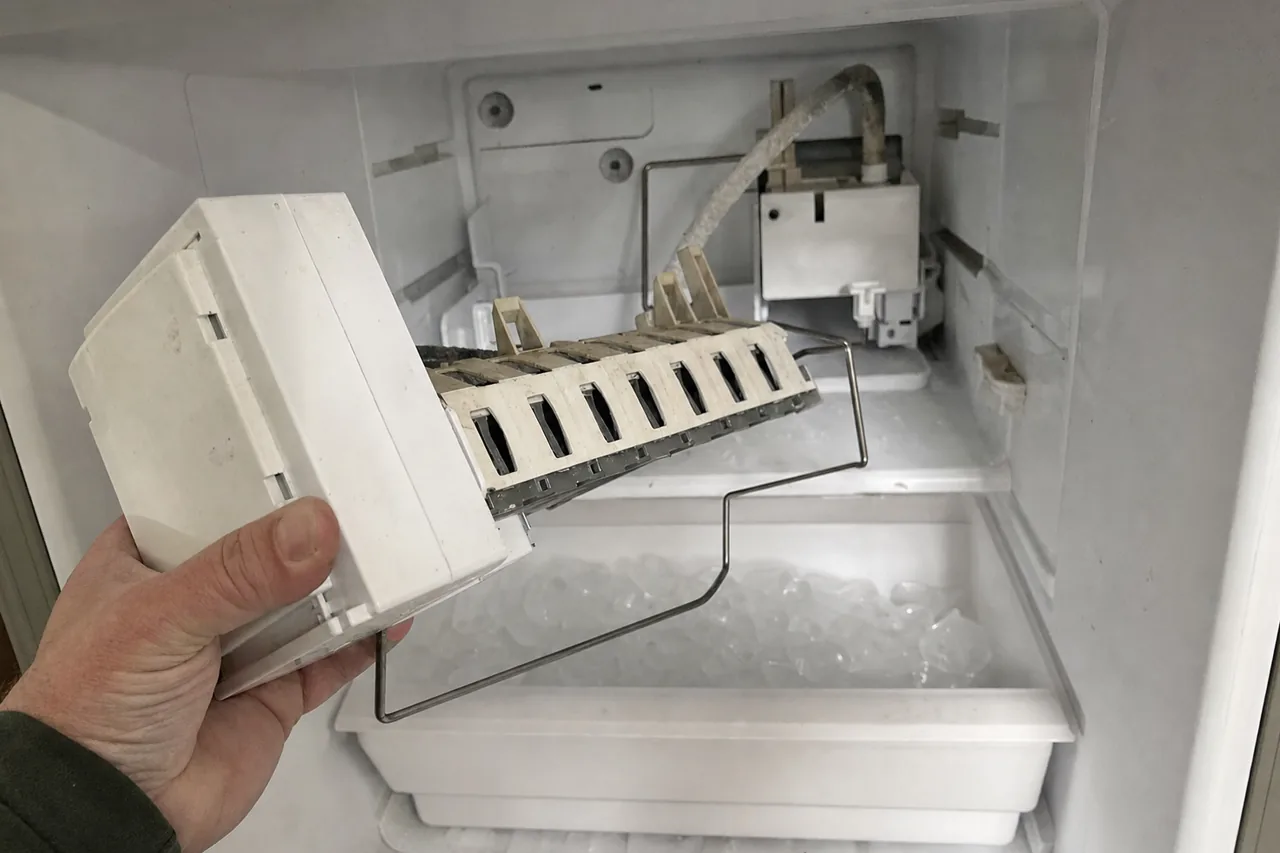
- Refrigerator is warm but the freezer is still cold
- Both compartments have drifted warm together
- Ice builds up on the back wall of the freezer
- Unit runs constantly and never cycles off
- Water pooling under the crisper or on the floor
- Ice maker fills but the cubes come out hollow
- Wine unit will not reach its set temperature in summer
- Door does not pull itself closed the last inch
Built-in refrigeration is the one category on this site where the diagnosis genuinely changes depending on which compartment is warm. That single question — one warm, or both — splits the survey in half before anything is opened, so it is the first thing we ask on the phone.
Our technicians hold EPA Section 608 certification, the federal credential required to handle refrigerant. That matters here because half of this category cannot legally or safely be worked on without it.
One warm, one cold
A refrigerator compartment that has drifted warm while the freezer still holds is an airflow or defrost problem, not a cooling problem. The machine is still making cold; it has stopped being able to move it. Two things cause that.
The first is the evaporator fan. On a built-in, cold air is generated in one place and pushed where it is needed. If that fan is stalled, obstructed or has lost its motor, the freezer sits over its own evaporator and stays cold while everything above it slowly climbs.
The second is defrost. Every frost-free unit heats its evaporator on a schedule to clear the frost that condenses on it. Lose the defrost heater, the terminating thermostat or the control that runs them, and frost accumulates until it blocks the air path completely. The tell is visible: ice built up across the back wall of the freezer, or a solid white sheet where the coil should be. Melting it with a hairdryer will restore cooling for a few days and then the same fault returns, which is how you confirm it rather than fix it.
Water on the floor or standing under a crisper belongs to the same system. The defrost drain runs from the evaporator to a pan near the compressor, and when it blocks, meltwater goes somewhere it should not.
Both warm together
When both compartments drift together, the machine has stopped making cold and the survey moves to the sealed system and the parts around it.
Before that, check the condenser. Built-in refrigeration breathes through a grille, usually at the top, and everything the room contains eventually arrives at that coil. In Clay County that means dust, carpet fibre and pet hair — not the salt corrosion the beach ZIP codes get. A blanketed condenser raises head pressure, the compressor runs continuously, and the unit still loses ground on a July afternoon. Cleaning it is maintenance, not repair, and it fixes a surprising share of “it is dying” calls.
Past that, the questions are compressor start components, condenser fan, and whether the system holds its charge. A sealed-system fault is not a parts-swap decision. It is a measurement, and on a built-in it is also a cost conversation worth having honestly and early, because a written estimate for sealed-system work on an integrated unit deserves a straight comparison against what else could be done with the money.
Ice makers, and the water that feeds them
Ice makers generate a disproportionate share of refrigeration calls, and the useful split is between an ice maker that makes nothing and one that makes bad ice. They are different investigations.
Hollow, undersized or slow cubes are a fill problem far more often than a mechanism problem. The unit fills for a fixed time rather than to a level, so anything that reduces flow reduces the cube: a supply valve only partly open after the last time the unit was pulled out, a saddle or shut-off left half turned, a line pinched behind the cabinet when it went back, or a filter left in service long past its life. Each of those is cheap to find and cheaper to fix than what people usually assume.
No ice at all is a different survey. The questions are whether the unit is calling for water at all, whether the fill valve is being energised, whether the mould heater releases the cubes at harvest, and whether the arm or sensor that tells the unit the bin is full has been left in the stop position — which is a genuinely common answer after a cleaning or a family visit. A unit that fills and freezes but will not eject is a harvest fault, not a water fault, and treating it as a water fault wastes the visit.
Undercounter and wine storage
Undercounter refrigeration and wine units fail in one predictable way around here, and it is an installation issue rather than a fault. These units are rated to hold their setpoint within a stated ambient range. Put one in a garage, an unconditioned porch or an outbuilding on Doctors Lake and it spends a Florida August trying to reject heat into air hotter than it was designed for. It runs constantly, never quite gets there, and wears out early.
If a wine unit holds temperature perfectly from November to April and loses it every summer, nothing is broken. The location is wrong, and the fix is ventilation or relocation rather than a compressor.
The door
Heavy built-in doors are hung on hardware that wears. A door that no longer pulls itself closed the last inch, or a gasket that has flattened along one run, lets humid room air into a cold cavity all day. The unit compensates by running longer, the evaporator ices faster, and the owner reports a cooling fault. Check the seal before you condemn anything expensive behind it.
What does built-in refrigeration repair cost?
The visit is a flat $80, credited toward the repair when you approve the work. What the repair runs on built-in refrigeration repair is below, parts and labour together, before the written estimate narrows it to one figure.
| Work | Parts and labour |
|---|---|
| Diagnostic visit | $80 flat, credited |
| Refrigeration fan or defrost system | $250–$610 |
| Compressor or sealed-system repair | $960–$2,580 |
It is a band and not a price because one symptom is usually several repairs, and they do not cost the same. The survey is what picks which one it is. The whole book, and what the fee buys.
Asked before a refrigeration call
- What does built-in refrigeration repair cost in Clay County?
- The visit is a flat $80, credited toward the repair when you approve the work. Compressor or sealed-system repair work runs $960–$2,580, parts and labour together. An itemised estimate reaches you before a part is ordered, and turning it down costs the diagnostic and nothing beyond it.
- How long is built-in refrigeration repair guaranteed?
- 90 days on the labour, 365 days on parts we supply. Genuine OEM parts only. We do not fit aftermarket substitutes into a professional range. An aftermarket igniter or sensor is the commonest reason a professional appliance comes back a second time, so none of them ride on the van.
- What should I have ready when I call?
- The model and serial off the rating plate, the symptom in the words you would use, and what changed just before it started. Parts on this equipment are revised mid-production, so the serial decides which one is correct more often than the model does.
Places on the peninsula where this equipment fails in a way worth writing down separately.
- Fleming Island: what actually fails hereA peninsula of kitchens that got their professional equipment when the houses were built. What ends its service life is ignition, sensing, control and wear.
- Pace Island: generators and control boardsA gated riverfront community. Two things shape the work here: getting through the gate, and what a whole-house generator does to control electronics.
- Doctors Lake: undercounter refrigerationBoth shores of the lake, from Doctors Inlet south. The recurring fault here is not a fault at all — it is refrigeration installed in air it was never rated for.
Surveys that work through one of these faults step by step.
- Storm season and control boardsBoards do fail here, and they mostly fail on a date rather than from age. That is a useful thing to know, because it changes the order of the whole survey.
- Cabinetry around Viking appliancesPlan the cabinets around the Viking numbers, not the other way round: range clearances, hood width and height, fridge openings, door swing and the utilities behind them.
- Water under a Viking refrigeratorFour sources account for nearly every puddle under a Viking refrigerator. The water's position and timing tell you which one, and most of the checks need no tools.
- Reading the rating plateTwo numbers off a metal tag decide whether the part is on the van or on order. Here is where the tag is on each kind of appliance, and what else to read off it.
What owners said after this work
4.5 out of 5, across 70 published owner notes. Read all of them.
Water was pooling under the crisper drawers every few days. Rather than blame the drawers he thawed and cleared a blocked drain tube and fitted the small clip that keeps it open. There has been no puddle since.
Fiona B.
The fridge side crept warm while the freezer stayed hard. He told me on the phone that a split like that means airflow rather than cooling, and so it was: the evaporator fan had stalled behind a wall of frost.
Fenella C.
The wine unit could not hold its setting once the afternoon heat came up. He worked through the door seal, the fan and the condenser before going anywhere near the sealed side. It was the seal and a blocked drain.
Gideon W.
Fleming Island, Clay County. Have the model number off the rating plate ready — it decides which parts ride out on the van. What a visit costs.