Method · Viking kitchen appliances
Viking cabinetry: planning cabinets around a Viking range, hood and refrigerator
Plan the cabinets around the Viking numbers, not the other way round: range clearances, hood width and height, fridge openings, door swing and the utilities behind them.
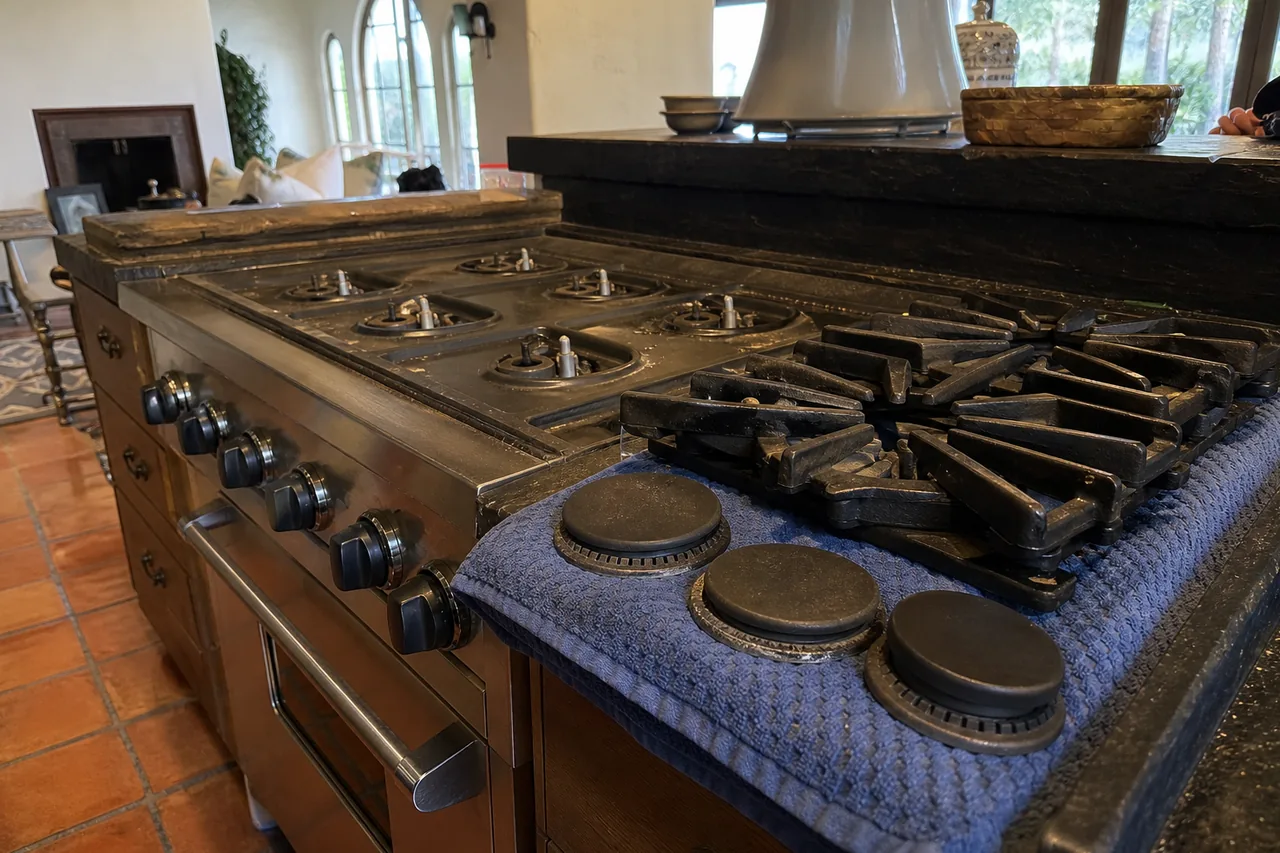
Viking cabinetry, in practice, means building the cabinets around the appliance’s installation numbers instead of trimming the appliance to suit the boxes. For a 5 Series freestanding range, that means wall cabinets at least 42 inches above the cooking surface when no hood is fitted, base cabinets that may sit tight against the sides below 36 inches, and 6 inches of space to anything combustible above that height. Built-in Viking refrigerators want a standard 24-inch-deep opening so the doors finish flush. Put those figures on the drawings before anything is ordered, whether it is a Pace Island remodel or a new Hibernia Plantation kitchen, and most fit problems never happen.
The range and the cabinets on either side
Below 36 inches, the 5 Series installation manual allows zero clearance at the sides, so the base cabinets can butt straight up to the range body. Above that line, a combustible surface such as a tall pantry side or a wall cabinet end panel needs 6 inches of space. Wall cabinets directly over the burners must clear the cooking surface by 42 inches unless a hood is installed there.
The anti-tip bracket belongs in the plan too. The metal brackets packed with a 5 Series range are the anti-tip devices, and the manual says not to discard them. Federal safety guidance adds that the bracket should be fixed firmly to the wall or floor with the range engaged in it, so clear any toe kick or back panel in its way before the range slides in.
Hood width and height against the wall cabinets
Viking Professional hoods mount 30 to 36 inches above the cooking surface, while the 10-inch-high models sit lower, at 24 to 27 inches. The hood also has to be at least as wide as the range or rangetop below it, so a 36-inch range cannot take a 30-inch hood squeezed between two wall cabinets. Size the cabinet gap to the hood and leave the duct a clean path.
Leave room for heat as well. Every Viking hood carries a heat sensor that pushes the blower to full speed once the air beneath it reaches 165°F, then drops it back to the earlier setting when the temperature falls below 147°F. A hood boxed in so tightly that heat lingers will run on high more often, which can look like a fault but is simply the sensor working.
Refrigerator openings, panels and door swing
Built-in Viking refrigerators, both the Viking-finish models and the Custom Panel versions that take door fronts matching the cabinetry, are designed to sit flush in a standard 24-inch-deep opening. The cabinet maker needs the exact opening size from the model’s installation sheet, plus panel sizes if the doors will be clad.
Door swing is the detail most often missed. On 5 Series units the door stops can be set to 90°, 110° or 120°, and they arrive at 110°. On 7 Series units the choices are 90° or 105°, and they arrive at 90°. A refrigerator tucked against a wall or a tall cabinet may need its stop changed so the door does not strike the neighbour, and so the drawers inside can still pull out.
Power, gas and water behind the cabinets
A 5 Series gas range needs a grounded three-prong 120VAC/60 Hz outlet on a circuit fused separately from everything else. Its cord is 4 ft long and draws no more than 1.0 amps on 30-inch models and 1.5 amps on 36-inch ones, so the outlet must be within reach without being crushed behind the range.
The range comes with its pressure regulator already fitted, set for 5.0 inches W.C.P. on natural gas or 10.0 on LP, and it must never be bypassed; inlet pressure may not exceed 1/2 PSI. Switching a natural gas unit to LP takes kit LPKPDR01 and a qualified installer or technician.
On the refrigeration side, the 42-inch VCSB5424 side-by-side wants its own 115 volt, 60 Hz, 15 amp circuit, and its 1/4-inch copper supply should hold between 20 and 120 psi.
Fit mistakes that lead to service calls
- Brackets left in the carton: an unanchored range can tip forward under a loaded oven door or a child standing on it.
- A kinked water line: copper bent sharply as the refrigerator is pushed home starves the ice maker and dispenser.
- A hood narrower than the range: smoke and grease escape past its edges and settle on the wall cabinets.
- The wrong door stop: the door hits the next cabinet and the hinge takes the strain every time.
If a fit problem has already caused a fault, a visit starts with the $80 diagnostic. A refrigeration fan or defrost repair, for example, typically falls in the $250–$610 range, with the firm figure given after diagnosis. Have the model and serial number ready; reading the rating plate shows where they are.
What does this one cost to put right?
The visit is a flat $80, credited toward the repair when you approve the work. What the repair runs on viking cabinetry: planning cabinets around a viking range, hood and refrigerator is below, parts and labour together, before the written estimate narrows it to one figure.
| Work | Parts and labour |
|---|---|
| Diagnostic visit | $80 flat, credited |
| Igniter or burner assembly | $210–$520 |
| Oven thermostat or heating element | $190–$610 |
| Control board or touch panel | $380–$940 |
It is a band and not a price because one symptom is usually several repairs, and they do not cost the same. The survey is what picks which one it is. The whole book, and what the fee buys.
Asked after reading this
- What does this repair cost?
- Control board or touch panel work runs $380–$940, parts and labour together, on top of the flat $80 diagnostic that is credited toward the repair when you approve the work. The survey is what turns a band into the one figure written on your estimate.
- Is viking cabinetry: planning cabinets around a viking range, hood and refrigerator worth repairing at that figure?
- Set it against $4,800–$17,500 for a comparable Viking appliance, before delivery, installation or cabinetry. Professional equipment is built to be repaired, so the answer is usually yes — and where it is not, we tell you before ordering anything.
- Do you work on any make other than Viking?
- No. One manufacturer is what puts the correct igniter, spark module and oven sensor on the van before the first visit rather than after it. A shop claiming every brand is carrying the parts for none of them.
The service pages this survey belongs to.
- Professional range repairSealed burners, the spark system, the oven cavity and the door. A range is four separate systems in one cabinet, and each one fails in its own way.
- Ventilation and hood repairBlower, controls, lights and duct. A hood that fails to clear the air is usually failing at the duct, and no larger blower will fix that.
- Built-in refrigeration repairColumns, French-door built-ins, undercounter drawers and wine storage. Airflow, defrost and door seal explain most of it before the sealed system does.
Places where this fault shows up often enough to be worth the note.
- Fleming Island: what actually fails hereA peninsula of kitchens that got their professional equipment when the houses were built. What ends its service life is ignition, sensing, control and wear.
- Hibernia Plantation: retrofit kitchensThe oldest-settled corner of the island. Older houses mean retrofit kitchens, and a retrofit kitchen fails at the install before it fails at the appliance.
- Pace Island: generators and control boardsA gated riverfront community. Two things shape the work here: getting through the gate, and what a whole-house generator does to control electronics.
Reading a survey and recognising your own appliance in it is a good reason to call. What a visit costs.